Tuesday, 16 July 2013

Come at me Bhai

July 10-16

Well, I survived my train ride. It ended up being forty-two hours instead of thirty-eight, but no big deal. I really enjoyed it.

And no special Simran on the train, though there was this elderly North Indian couple in my cabin that seemed to complain and argue about something every hour. I guess we can call them the “Raj and Simran” forty-years later.


And then there was this guy. He slept for most of the trip and snored heavily, but I wasn’t sure if more noise was coming from the top or from the bottom.


The food on the train was pretty good. I was in first class, so I guess I somewhat got a royal treatment (not really).


Though I was inclined to sing Tujhe Dekha To Yeh Janna Sanam while walking through the train corridor, I stopped myself after seeing this sign, so that no woman would think I was trying to harass her through “songs and unwanted attention”
.


The scenery was quite diverse while going from Kerala to Delhi.


I arrived in Delhi and I felt like I was in a completely different country. Before leaving Kerala, one of the seminarians taught me three essential words that I should know in Hindi.
Pani – Water
Khana – Food
Bhaiya –Brother

I asked him what the word “bathroom” is in Hindi, and he didn’t know. Hmm…

Delhi is more of a metropolitan city than Ernakulam. It’s more diverse, with people from all over India, and it seems to be more modern than Kerala. They recently got a new metro system here and it’s really awesome. Much better than the NYC Subways and definitely much better than the Chicago “L”. But then again, what isn’t better than the Chicago “L” ?


I stayed at a parish in Dwarka for the first couple of days I was here. The whole city is broken up into “sectors” so when people refer to where they live, they’ll say things like:
“I live in Dwarka, sector 7”
“Chacko lives in Dwarka, sector 4”


While at the parish, a few neighboring kids would come by and do their homework on the church property. I would try to speak to them, but because I know only three words in Hindi, I felt so powerless. You realize how important your hands are in moments like these.

A few days later, a family friend picked me up from the parish and took me to his home. He assumed that I was not accustomed to eating India food, so he took me to an array of American fast food places. I was looking forward to getting authentic North Indian food, but everyone assumes that since I’m from America, I can’t handle spicy food. Sometimes I wonder if people in India see me and see a white kid named Charlie Plovanich

 We passed by Dominos, KFC, and McDonalds, but we ended up going to Subway. The Subway menu in India is pretty cool. There are special India subs and spicy dressings you can put on your sandwhich. But other than the menu, I felt like I walked into a replica of a Subway in America


The furniture I found in the Indian subway was the same exact set of chairs and tables they have back home, they use the words “footlong” and “6-inch” to measure lengths, despite Indian’s use of the metric system, and Rihanna’s Go Hard was blasting in the background. But what was the main reason for why I felt like I walked into a carbon-copy of a Subway from America?


Indians working behind the counter.

In Kerala, the auto-rickshaws are brown/black, while in Delhi they are green. An uncle told me that in Kerala the auto-rickshaws run on diesel while the auto-rickshaws in Delhi run on combustible natural gas. It’s nice to know that palak paneer isn’t the only thing going green in Delhi. 


Speaking of vehicles in Delhi, Delhi driving is probably ten times as worse as Kerala driving, which means crossing the street is also ten times as worse. But a family friend I was with told me the secret of crossing the street. This is what he said:

Don’t run. Don’t look scared. You have to look calm. The moment you look scared, someone will hit you. Just simply start walking. If you see a car coming straight towards you, just put your hand out and tell that person to stop.

Powerful words.

So I tried it out. I went into calm mode, walked across the street, and though the next oncoming car was more than fifteen meters away, I still put out my hand like a boss and managed to cross the street in one piece. Come at me Bhai.

It’s really interesting meeting the Delhi-born Malayali youth. In many ways they resemble American-born Malayali youth. Though at home they speak Malayalam with their parents, they speak Hindi and English at school and in public. It’s really fun to listen to these youth speaking to their parents. The parents might be talking in Malayalam, their children responding in Hindi, and randomly, both the parents and children speaking English in between the Malayalam and Hindi –trilingual conversations.

I asked many of the youth if they consider themselves “Malayali”, but many of them don’t like using that terminology and just prefer to be called “Indian”.

I was blessed with the opportunity to attend part of a Jesus Youth four-day program for teens who just finished high school and are about to enter college. They talked about topics such as, relationships, substance abuse, balancing study and extra-curricular activities, and keeping the faith. Many of the struggles that the college teens go through in Delhi are exactly what the college students back in America.

On the last day, they had a hardcore jam-session, led by an awesome band called Acts of the Apostles.

Blessed Kunjachan also enjoyed having jam-sessions with the Dalit Catholics on their annual retreats (sorry for the poor segue).

He probably didn’t use the electric guitar, but I’m sure they pulled out the harmonium and jammed out to some Syriac hymns.

Kunjachan went through great struggles to offer annual retreats for the Dalit Catholics. It was hard for the landlords to let their Dalit laborers to let them go and attend a three-day retreat, so Kunjachan even went to the extent of visiting the landlords and persuading them to let their Dalit Catholics workers come to the retreat.

Catechesis, basic education, and sacramental ministry were a big part of the retreats Kunjachan gave. The Dalit Catholics went to him for confession, and Kunjachan would remain in the confessional for hours until everyone was heard.

Sometimes Kunjachan would invite extra priests to help out with confessions, but many of them were not so fond of hearing the confessions of the Dalit Catholics because of their lack of understanding of the sacrament of confession.

One of the priests complained to Kunjachan saying:

They do not know what sin is; they do not know what repentance is: what forgiveness is and what restitution is

And Kunjachan responded to this priest saying:

Father, you just listen to them; hear them; you may not understand what they are confessing; you may be suspicious of their motives, and what they want. But God is listening too; He knows; He understands them. you just pass on His forgiveness to them; Absolve them of their sins; everything will be alright

Boss.

“May God, the Lord of all, wash away the stains of our debts and sins, in the ocean of His mercy”
-SyroMalabar Qurbana


Wishing all the Rio pilgrims a blessed experience at World Youth Day!


Monday, 8 July 2013

Fifty Shades of Brown

July 8th-July 9th

My time in Kerala has been unforgettable. Tonight I will be going to Delhi.

I kind of wish I was able to stay here in Kerala a bit longer. My Malayalam has been improving but now I’ll be going to Delhi where I think they speak hindi, so I guess the Malayalam will be put on hold for the next few weeks.

My knowledge of Hindi only consists of Bollywood film and song titles, and I’m not exactly sure how useful they would be for a seminarian. Perhaps I can use the words, dil, pyar, and mohabbatien to describe my burning love for the Sacred Heart of Jesus, but at least I can call whoever is supposed to pick me up from the train station in Delhi and say main hoon na.

Yes, by train. Thirty-eight hours of riding over three-thousand kilometers of pure Indian rail.

Now, I know what you’re thinking. Foreign born Indian riding the train in India?


But don’t worry, I’ll make sure I don’t get locked into any train compartment with a girl

…named Simran.


But if I did learn anything useful from Shah Rukh Khan about riding the trains in India, it would be that dancing on top of a moving train and having no care in the world whatsoever is completely normal!


What will I be doing for thirty-eight hours? Mostly reading, praying, and people watching. The train will be starting at Ernakulam and ending in Delhi, passing through Karnataka, Maharashtra, Gujarat, and Rajasthan. Reminds me of the Bronx Syro NE Conference youth dance. Hoping to see around fifty shades of brown.

My reading list:
-Excerpts from The Way of Life (Essays and Articles by SyroMalabar Theologians)
-Revolution 2020 by Chetan Bhagat
-Excerpts from Women, Sex, and the Church (Essays and Articles by Catholic Feminists)
-Kunjachan: A Good Shepherd by Fr. Kurian Mathothu

I always tend to overload on my books whenever I travel and sometimes, I never get through to reading any of them. Hoping to get through at least five pages of each book…

Since this is a thirty-eight hour train journey, I won’t be able to attend daily mass for two days. I ask all who will be going to daily mass to please remember me and the people of India in your prayers. I also won’t be able to shower for thirty-eight hours, but it would probably be best if you not remember me during your shower.

I will miss all the brothers and priests at Mangalapuzha seminary. So many beautiful moments. I was able to go for more service trips with the brothers and I think they have become my favourite (that was intentional) part of being at the seminary. The classes here are great, but who in the right mind would love sitting through hours of systematic theology? (Jaisy Joseph is the exception)


This past Sunday, the brothers took me to a type of ministry that was completely new to me –jail ministry.


Every Sunday, one of the priests from the seminary comes to the jail to offer Holy Qurbana for all the Catholic inmates. Because of time constraints and commitments with the seminary, often times the priest only has time to offer Holy Qurbana and hear confessions, so who actually speaks, consoles, and prays with the inmates in a not so Sacramental way? 

Religious sisters.


Kerela is full of religious sisters and nuns. Wherever you go, you will see so many women in habits! But recently the Church in Kerala has been faced with a “crisis”.

In 2008, there were five-thousand candidates in the convent (women preparing to become nuns and sisters), but in 2013, the number has dropped to eight-hundred.

I asked one of the priests why the numbers had decreased so drastically within a short period of time and he said that it’s very complex and that there are several reasons.

He said that certain types of ministry that were once limited to religious sisters and nuns, like running orphanages, teaching in schools, and caring for the physically and mentally disabled, are now being taken up by many lay people, so a woman doesn't have to take the vows of poverty, chastity, and obedience in order to serve these different groups of people.

Also, most Catholic families in Kerala are having on average about two children, so while families in the past had several children, in which it “did not matter” that one of the girls was joining the convent, today many parents are a bit more reserved when it comes to letting their only daughter join the convent.

But what’s interesting is that, according to the priest I asked, families are more likely to allow their only son to join the seminary rather than let their only daughter join the convent because priests are seen by the community as “necessary for the Church”.

Religious sisters and nuns aren't necessary?

I’ve met so many religious sisters and nuns who radiate nothing but joy and love through their total surrender in responding to the beautiful call to live as a spouse of Christ.

I’m glad the Imagine Sisters Movement is creating a film to help the world recapture the beauty of religious sisters and nuns. Hopefully we can come to see the need in the Church for women to respond courageously to this call.


But fear not Church in Kerala! Pope Francis has some encouraging words for you!

“The spread of the Gospel is not guaranteed either by the number of persons, or by the prestige of the institution, or by the quantity of available resources. What counts is to be permeated by the love of Christ, to let oneself be led by the Holy Spirit and to graft one’s own life onto the tree of life, which is the Lord’s Cross” 
–Mass for seminarians, sisters in the novitiate, and those discerning their vocation

The Gospel reading for that Sunday when we had Holy Qurbana at the jail was perfect. It was about Jesus telling his disciples a parable on how to invite guests to a banquet.

. . .When you hold a lunch or a dinner, do not invite your friends or brothers or your relatives or your wealthy neighbors, in case they may invite you back and you have repayment. Rather, when you hold a banquet, invite the poor, the crippled, the lame, the blind. . .
-Luke 14:7-14

It was beautiful to see that, though these men were locked up in jail, they were nevertheless invited, just like everyone else, to the Divine Banquet –the Holy Qurbana/Divine Liturgy/Holy Mass. It was a reminder for me that whether a person is a criminal, an untouchable, or a member of the gay and lesbian community, all are invited to the Divine Banquet where they, after preparing their hearts, can come to receive the precious Body and Blood of Christ that nourishes the soul and brings man into communion with God and neighbor.

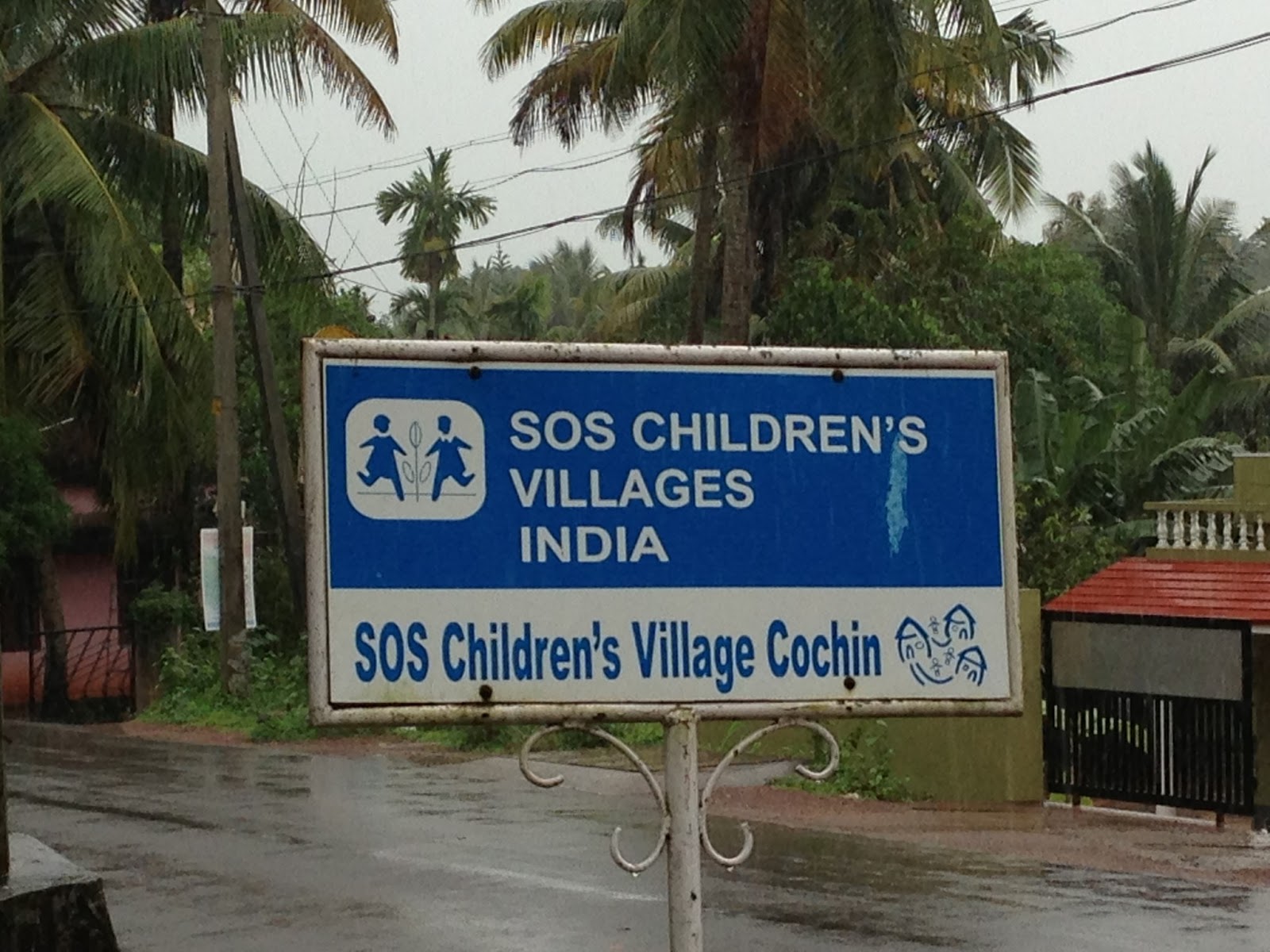
I also had the privilege of joining another group of brothers on their service trip to a nearby house for orphaned children called SOS Children’s Village where they tutor the kids in all subjects.


It’s nice to see that the seminarians here consider helping someone in their education just as much a ministry as visiting the slums and jails. The brothers tutor a few kids in all areas such as math, science, history, Malayalam, and English.


But giving children a proper education to all people isn't only unique to today's Church in Kerala. Giving the Dalit Christians a proper education was also an essential part in Blessed Kunjachan’s ministry.

At that time, Dalits were not allowed to join Public schools. Families from the high caste did not want their children studying side-by-side with an untouchable. The teachers didn’t want them there either.

It was unthinkable for a Dalit to think that he or she was worthy of receiving an education, since the caste system ensured that only the high-caste members of society would receive any type of education, while keeping the untouchables illiterate, ignorant, and far from any power gained through knowledge.
 .
So Kunjachan started small shed-like schools called Kalaris where he appointed teachers to give the Dalit children a basic education. They did not have money to buy basic school supplies, but Kunjachan fund raised enough money to get the Dalit students the essentials. 


When they grew older, many of them wanted to pursue higher studies beyond a basic elementary education, so Kunjachan fought for their ability to study in the Boy’s High School in Ramapuram. He persevered and was able to get the Dalits entrance into school where non-untouchable students were present as well.

Boss.

Lord, our God! Grant that we may enter the Holy of Holies with clean hearts and pure conscience. May we stand before Your altar with devotion, diligence, and purity. Make us worthy to offer You sacrifices, both rational and spiritual in true faith
-Prayed by the priest in a low voice before the Creed, SyroMalabar Qurbana


(Altar and Eastern Wall at Kollad Little Flower Church (MCBS),Archdiocese of Changanacherry)

Saturday, 6 July 2013

Offer It Up

July 2nd-July 7th

As you all know, there is no doubt that I have been having a beautiful time in India. But it hasn't been easy.

Transitioning into a different culture and getting used to the environment here is no easy task, especially for an ABCD, so whenever I am faced with a difficult adjustment or an inconvenience, the only way to get through it is by telling myself to offer it up.

My time here has passed the halfway mark, so in light of the Catholic tradition, I have decided to write my own litany with the response: offer it up

The Litany of Kerala for an ABCD

For the gust of B.O. when you walk outside of Cochin International Airport, offer it up
For being unable to find a place to click your seatbelt into, offer it up
For knowing that every car ride in India might be your last, offer it up
For the oncoming bus that's headed straight towards your car and doesn't seem to be moving any time soon, offer it up
For not knowing how a bus, a car, an auto rickshaw, and a motorcycle manage to drive side-by-side in a two lane road, offer it up
For getting weird looks from the driver because you scream whenever the car misses crossing pedestrians by an inch or two, offer it up
For having to let go of my "manliness" and hold someone’s hand while crossing the street, offer it up
For getting pushed and shoved on the bus because of a lack of aggressiveness, offer it up

For red ants, big spiders, and giant cockroaches, offer it up
For mosquito bites, offer it up
For getting mosquito bites while eating, offer it up
For getting mosquito bites while showering, offer it up
For getting mosquito bites while writing this litany, offer it up
For using a mosqito net in reverse and trapping ten mosquitos inside while I sleep, offer it up
For looking like a fool during Mass because of all the failed mosquito assassination attempts, offer it up

For having to explain to every person I met about what each person of my family is currently doing, offer it up
For having to wake up before 6am almost every day, offer it up
For putting up with the lack of the Oxford comma in Indian English literature, offer it up
For always sweating in 110% humidity, offer it up
For forgetting to carry around an umbrella during monsoon season, offer it up
For sambar stained fingernails, offer it up
For not being able to understand people with a Thrissur accent, offer it up

For missing out on all the fun happening back home in America, offer it up
For missing out on seeing Martin dance on stage for the first time, offer it up
For missing Deacon (now Father) Michael Edathil’s Ordination, offer it up
For knowing that my time India will eventually come to an end, offer it up


But aside from all this, I really am having a wonderful time in India.

I also had the opportunity of seeing the movie ABCD

I really enjoyed the movie. It was funny and it was nice to see a few familiar faces from back home. But what I really enjoyed was how the film makers portrayed the American born Malayalis, the ABCDs.


The ABCDs they depicted in the movie are far from real. The American born Malayalis in the movie are sons of millionaires, drive around in Lamborghinis, go clubbing every night, get into violent gun fights with “the blacks”, and do nothing but waste their parents' money, spending nearly $20,000 a month on clothes, phones, girls, etc.

Sorry Johnny monne, ithe New York life alla.

I’ve always wondered why people in Kerala get so surprised when I tell them that I’m in the seminary. But I guess if this is what image they have in their mind of American born Malayalis, I would be surprised too.

I feel like my presence in Kerala, fully being capable of eating Kerala style food, and somewhat speaking Malayalam is making the people here rethink their understanding of people like me


I wasn’t sure whether I would be able to see the movie. The seminarians only have certain days throughout the year when they can go watch movies. I thought that I could probably go there by myself, so I asked one of the priests for directions. He ended up taking me to the movie…and watching it for a second time.

The theater seemed brand new and had a pretty nice food court. I was really surprised. 

                                                                                                                     
Before the movie began, a picture of the Indian flag was shown on the screen and the audience was asked to stand up and sing the Indian National anthem. It was a proud moment for me to join in and sing the national anthem, all thanks to my days back at Gurukalam. And thankfully, I was able to stop myself from transitioning right into the American National anthem…


My time at Mangalapuzha Seminary has been great. I was able to join the brothers on their weekly “social service” trips. I joined a group of seminarians on a visit to the slums, but it was a bit different from my last time of visiting the slums with Br. Jigin at Vadavathoor.

There seemed to be a lot more suffering at this “colony”. The brothers were telling me how many of the children growing up here have broken families; almost all the fathers here are alcoholics and many of the mothers have ran off with other men.

Recently, there was an event that struck the whole community. Just a few days back, one of the fathers here committed suicide; he hung himself right in front of his son.

There’s a lot of pain here. The brothers do whatever they can to alleviate it from praying with them to building new homes for them. In years past, the seminarians would come once a week just to tutor the kids, but they had to discontinue because it was really difficult for the students to focus and so they weren’t able to learn much. But how can you blame them when they’re growing up with all these issues?

When we arrived, there were several families who we visited who welcomed us into their homes and talked with us for quite some time, but there were also many families who did not want to see us at all.

We knocked on some doors and told whoever was inside that the brothers from the seminary had come, but some people responded saying that if we didn't have money or even candy to give to their kids, there was no point in coming by.

The brothers saw a familiar face and asked the middle-aged woman if she was doing well, and she responded saying:

Well? You want to know if I’m doing well? Do you not see that I live in the slums? Do you not see how heavy it’s been raining here these past couple of days? Well? Go back to the seminary where you belong!

Some families welcomed us, some didn’t, but we continued on. 

The story of Blessed Kunjachan and his work with the Dalit community was no different.

While it may seem like Blessed Kunjachan’s efforts to liberate the Dalit people would have been accepted wholeheartedly by them, they were not. Many were cold to him, not wanting his presence among them, seeing him a radical destroyer of the status quo. Some scolded him and rebuked him, but he nevertheless remained steadfast to the mission given to him by God and continued to persevere in working towards the liberation the Dalits who were open to Blessed Kunjachan’s love and care.

How did Blessed Kunjachan manage to persevere in the liberation of the Dalits, despite the many hardships and setbacks he endured from the very people he was trying to liberate?

He offered it up.

Lord Jesus Christ, you offered yourself as a sacrifice to remit the sin of the world. Strengthen us to make up all the hardships that Christ had to undergo for the sake of his Body, the Church. Treading the path of your commandments faithfully, let us reach eternal happiness. Lord of all, forever


-Slotha, Sunday, Period of Summer, Lelyia (Night Prayer), SyroMalabar Liturgy of the Hours


(Life-size model of the crucifixion at St. Mary's Forane Church, Chalakudy)

Monday, 1 July 2013

Organized Chaos


June 26th-July 1st

Yes, sorry about the inconsistent and sporadic posting. Let it be a reminder to be watchful and vigilant because, “For you yourselves know very well that the day of the Lord will come like a thief at night” (1 Thes. 5:2).

So I departed from Vadavathoor Seminary on June 26th and went back to my grandmother’s house in Changanacherry. During my days there, I was able to rest and relax a bit, since I didn’t have to wake up at 5:15am every morning.

On one of the days, I had the privilege of being able to go a prolife outreach activity with my uncle and a few members of a prolife movement called Krupa Prolifers.

Before going, I imagined possibly praying a rosary outside of a hospital that does abortions or watching the leaders do sidewalk counseling, but when I asked my uncle what we would be doing, he said that we would be giving haircuts and shaving the beards of almost one-hundred men at a nearby institution that takes care of mentally challenged patients.


What does giving haircuts and shaving beards of mentally challenged patients have to do with the pro-life movement? Just about everything. 

I arrived to St. Joseph Pontifical Seminary in Aluye, which is near the big city of Ernakulam. The campus here is absolutely beautiful. I feel like I’m at a Hogwarts for Indians (minus the magic).


The day after I arrived, the seminary community celebrated the Feast of St. Peter and Paul, so whenever there are special feast days throughout the year, the seminarians are allowed to go for an “outing”, which means, they get to leave the campus for an extended period of time and can pretty much do whatever they want (provided that they are not formally or materially cooperating with sin).

So I joined the brothers on their outing to Ernakulam to explore the city and see what it has to offer.

But of course. . .


But I must first tell you all about the journey there. Oh my.

If you’ve never been on a bus in Kerala, you haven’t experienced life yet. The buses are crowed and smelly, but that’s not the main reason why the buses here are crazy, since the subways in New York and “L” in Chicago are no different during rush hour. What makes the buses in Kerala really crazy is that everyone getting on or coming off the bus have about ten seconds to do so. If you take too long, the bus will leave, so the sight of seeing men and women jump on and walk off a moving bus is nothing unique here. The brothers made sure I was the first one in the group to get on and get off the bus, so thankfully, I didn’t have to pull out any of my non-existent parkour skills and jump out of the bus.

But the bus was actually the easy part of the journey there; what was really crazy was having to cross the busy NH 47. I’ve crossed plenty of busy roads in the U.S., both in downtown Chicago and New York, but nothing compares to crossing the road in Ernakulam. In America, pedestrians have the right of way, but in Kerala, pedestrians must get right-out-of-the-way because no one will stop if they see you crossing the street. Perfect real-life opportunity to use my Frogger skills from back in the day (and they said video games couldn’t help you in life).


I held on tight to my brothers as they crossed the dangerous national highway. I was also dumb enough to record it. Enjoy real life Frogger!


Though driving in Kerala pretty much has no rules, everyone seems to get from point A to point B in once piece. Organized chaos. 

We finally made it to Lulu mall and it is CRAZY! Probably better than all the malls I’ve been to back in the U.S.(which isn’t that many, but still!)


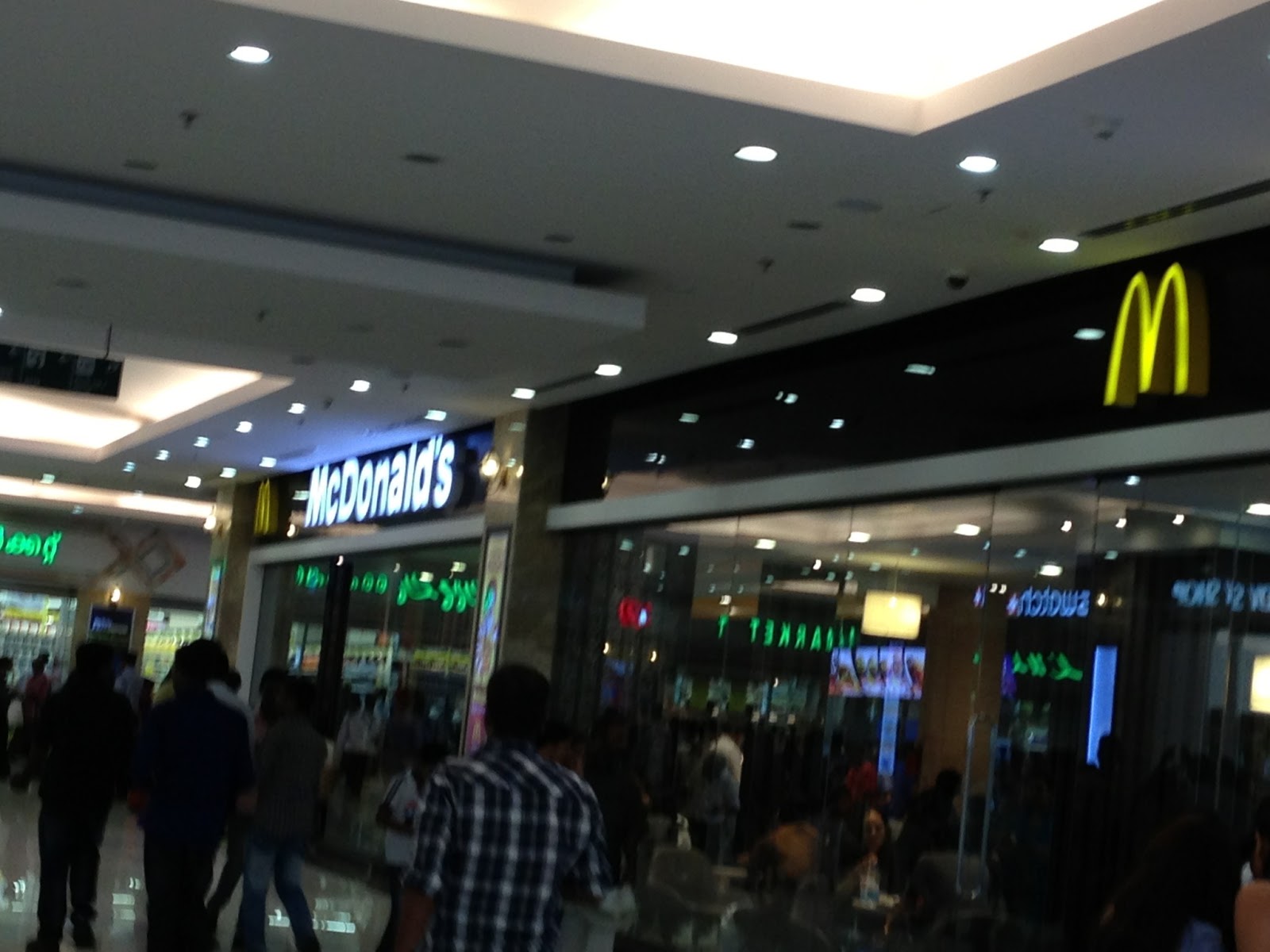
There are so many brand name stores, eateries, and even a small theme park. So many things to do, but of course, we just simply walked around, visited electronic stories, and talked about how none of us could afford any of these items. We planned to just leave after spending a few hours of walking, but then, something caught my eye; I was speechless. My lover from America came to see me, shining so brightly, and looking more golden then ever.


I immediately told the brothers that I would not leave the mall until I bought McDonalds. I also told them that I would not leave the McDonalds unless they all ate something from there. It was funny seeing their reaction to the second condition; they told me that they’ve never had McDonalds before and that they don’t know what to buy.

Did they know who they were with? Good thing I got them covered.


I felt like such a B0$$


...or if you think I’m corrupting these innocent children with the negative aspects of American culture, perhaps this meme applies to the situation better…


They don’t have any beef on the McDonalds menu in India, but they do have plenty of chicken. There’s no American-style Big Mac, but if you’re feeling like a king and wanna go big. . .


The Chicken Maharaja Mac. Legit.

We got McChickens and fries, and right before we were about to pray grace and eat, I told them the one and only rule: we only speak English while we eat McDonalds.

So we had a nice meal and I got a chance to tell them all about American culture and answer any questions they had. We slowly got into the topic of evolving women’s fashion in India and how it's becoming more westernized. One of the brothers asked a pretty funny question (well, at least to me)

“Brother Kevin, girls in India are starting to wear a type of clothing called leggings. Do girls in America wear leggings?”

lol.

And here's the gang.


                         (Ain't nobody fresher than my clique)

After Lulu Mall, the brothers took me around the area to show me some tourist spots. We stopped by a famous Hindu temple called Aluve Sivarathri Temple. There was a nice boating area, so we decided to hop on a go for a short ride.


The following day was Sunday and I had to get up at 5am. On Sundays, the seminarians studying theology leave the seminary at 5:30am to take a bus to their pastoral assignments, where they spend most of the day teaching Sunday school, assisting the priests for the Holy Qurbana, and visiting families. I went with Br. Jithin from the Kothamangalam Diocese to his parish assignment at St. Mary’s Forane Church in Chalakudy.

Br. Jithin is a boss. When he does family visits around the parish, he takes the pastor's motorcycle and rides to each of these houses, while wearing his cassock.


I got to visit all of Br. Jithin's Sunday school classes. I was expecting to just sit in the back of the classroom and listen to him teach, but without telling me, he ended up having me lead the class by telling them about my vocation, seminary life, and culture in America.

The students were all shocked that I knew a little bit of Malayalam. Br. Jithin, along with all of the other seminarians, all introduce me to priests, sisters, and lay people saying, 

“This is Br. Kevin. He is from America, but his parents are Malayali”. 

I guess I’m only an American then…

The students were great. They had so many questions to ask me about American culture. I was really surprised by how much they knew about American culture. They were all up-to-date on their American movies and music. I asked them if they knew who Justin Beiber was, and they all did! One of the boys raised his hand and said, 

“In India, the girls tend to like Justin Beiber more than the boys. Actually, the boys don't like him at all”. 

Not only in India my friend, not only

I tried telling them how I’m American, but at the same time Malayali. They couldn’t really understand it, but luckily, most of them saw the new Malayalam movie ABCD (American Born Confused Desi), and so I tried to explain to them how I’m a real life ABCD…


Catechesis is really serious here in Kerala. While I was learning how to connect the dots to outline the shape of an Easter Bunny in my years in CCD (I'm exaggerating a bit) , the students at this Sunday School this past week learned about materialism, moral relativism, and other contemporary issues the Church faces in the third millennium. God has a great sense of humor having me –an America –sit in in all of these classes that are somewhat aimed at showing Indians what Americans are like.

Catechesis has been an important part of faith formation in the Church for centuries, and it was no less a part of Blessed Kunjachan’s work in the liberation of the Dalits in Kerala.

For Blessed Kunjachan, to love the members of the Dalit community with the love of Christ, but to withhold from them the home that the Church gives, would have been inconceivable. 

Pope Francis speaks beautifully about the inseparability of Christ and the Church saying:

"Because it is not possible to find Jesus outside the Church. The great Paul VI said: "Wanting to live with Jesus without the Church, following Jesus outside of the Church, loving Jesus without the Church is an absurd dichotomy." And the Mother Church that gives us Jesus gives us our identity that is not only a seal, it is a belonging. Identity means belonging. This belonging to the Church is beautiful."

Whenever he would visit the homes of the Dalits, he would always bring a catechist with him and instruct them of the treasures that the Church has to offer. Though Blessed Kunjachan never forced any of the Dalits to convert to Catholicism, many they were inspired to receive Baptism and so became members of the Mystical Body of Christ –the Church!

Blessed Kunjachan faced a lot of ridicule and verbal abuse from Hindus of the upper class because he was converting the slaves of wealthy landlords and teaching them about the message of Jesus Christ. Not only did he face obstacles from upper class Hindus, but he also faced much apathy and indifference by his own Christian brothers and sisters.

In his initial years working towards the liberation of the Dalits, many members of his own parish did not fully agree with his efforts to work with the untouchables. It was socially unacceptable at that time for a Christian to eat at the house of an untouchable, and even more so for a priest, who was seen as a person of high rank and prestige among the parish community.

Despite these obstacles and problems, Blessed Kunjachan nevertheless drew his strength from the Eucharist and continued to persevere in working towards the liberation of the Dalit people. He embraced these people into the womb of the Church and nourished their souls with the Sacraments the Church hands down from generation to generation.

May we come to an experience of the love Christ has for us, especially in the Most Blessed Sacrament, and let that love overflow towards our neighbor. May Blessed Kunjachan’s love for Christ and His Church inspire us to do the same for the marginalized people of the twenty-first century.

  Just like the ark of Noah, floated on the waves
  The Church is the ark that saves us on the sea of life.
  The white dove brought good tidings in those days of old.
  The Holy Spirit gives it to the Church and saves her
-Onitha D’Wasar, Tuesday Ramsha (Evening Prayer), Period of Dedication of the Church, SyroMalabar Liturgy of the Hours


(Perpetual Adoration Chapel at Christ the King Knanaya Catholic Cathedral, Kottayam)